Table Of Content
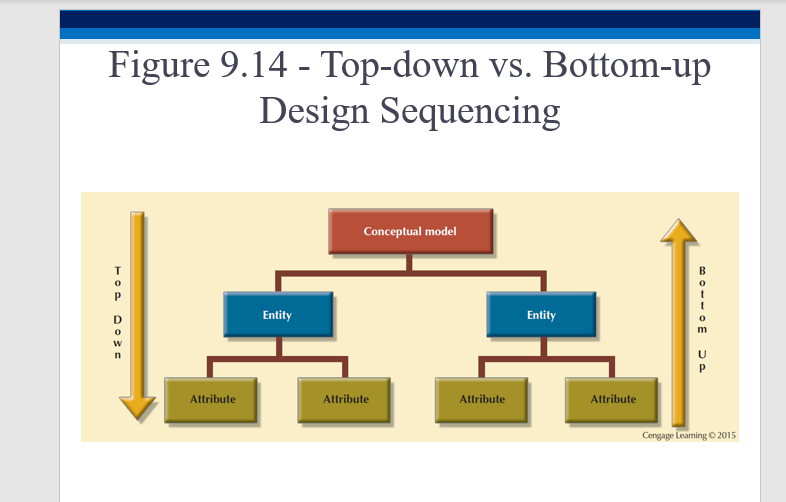
We start with the basics, layer on more complexity, and voilà – we’ve got a masterpiece that’s more than the sum of its parts. The most significant difference between the two types of models is that the bottom-up model is based on the composition approach, while the top-down model is based on the decomposition approach. Top-down model has tight coupling issues and low interactivity between various modules. Top-Down Model is followed by structural programming languages like C, Fortran, etc. CAE UNIVERSITY aims to provide focused and cost-effective training material for learning the CAD, CAM, CAE and related technologies.
Advantages of Bottom-Up Approach
Though not part of your day-to-day processes, these additional brainstorms can help stimulate creativity, build relationships, and lead to creative solutions that can later be implemented to benefit the greater group. The key to implementing a management approach that works is to invest in your people as much as you do in your processes. The challenges of the top-down management approach can be alleviated or even eliminated entirely if the people at the top of the process aren’t just good managers, but are leaders too.
bottom-up Business English
They are able to see the big picture and make decisions that align with the overall mission and vision of the organization. Bottom-up testing, which begins at the lowest level of the hierarchy and works its way up, refers to the process of testing crucial modules or functionality at an earlier stage. The primary function of drivers is to satisfy the needs of modules that are either absent or incomplete in order to carry out evaluations of lower-level modules. However, drivers are more difficult to design than stubs since they need more information. The bottom-up strategy, which is used in situations in which the primary module is not yet available, makes use of drivers. When the higher-level modules have not yet been established, drivers are tested to ensure that the lower-level modules function properly.
Bottom-up approach examples
Both approaches are valid and should be considered when designing a balanced investment portfolio. Smaller teams or teams with a narrower project focus will have the freedom to lean more heavily on the bottom-up style. Most teams apply a hybrid approach that falls somewhere along a spectrum of combinations between top-down and bottom-up management styles.
What Is a Limitation of a Top-Down Approach?
Though it’s important to give team members the opportunity to provide feedback, not everyone is comfortable doing so—especially with leadership in the room. Keep in mind that everyone has different comfort levels and pushing too hard for feedback might stifle honesty or creativity. The bottom-up approach encourages greater buy-in from team members because everyone is given the opportunity to influence decisions regardless of seniority. It also facilitates better relationships between colleagues by offering members of all seniority levels an equal opportunity to influence project outcomes.
Both the top-down and bottom-up styles of management offer significant advantages for the companies that leverage each approach. Both styles distinguish between high level and low level work, but how each management styles achieves this process varies widely. As with any business, the goals of each are to appropriately and efficiently think, teach, gain insight, and develop an overall leadership system that works well for the company and generates revenue. The bottom-up style of management solves many of the problems that come with the top-down approach. This approach has advantages that make it a great fit for creative teams and industries where collaboration is key, like software development, product design, and more.
Boost Employee Performance with Workplace Wellness Programs in 2024
Top-down budgeting assesses the larger budgeting strategies of a company and allots a certain amount to certain departments, events, and employees. Well-known, popularized figureheads who own companies also leverage this approach. For any product team, the top-down and bottom-up approaches are crucial strategies. The top-down approach provides a high-level vision for the product, while the bottom-up approach ensures that the planned features in the roadmap are prioritized and designed to satisfy the market’s needs and bridge any gaps.
Sometimes referred to as a stepwise design or decomposition, a system and its goals are broken down into compositional sub-systems in order to gain insight into the smaller aspects that make up a larger system. This format is made more specific with the assistance of black boxes, which make the backward-looking approach easier to follow as upper management pushes down decisions. This delegation of tasks is sometimes referred to as reverse engineering or a big picture outlook because of the way larger goals are fragmented into small tasks that are then handed down to lower level employees. Organizational culture and industry also play a crucial role in the choice of management style. Industries that are more innovative, such as software development and product design, tend to favor bottom-up approaches, as they encourage collaboration and creativity among team members. The top-down approach came to be in the 1970s, when IBM researchers Harlan Mills and Niklaus Wirth developed the top-down approach for software development field.
Fix these common onboarding challenges to boost productivity
After that, the product leaders will start assigning initiatives and features to different product managers and product teams, and the actual work of designing and building them will start. Product initiatives are a high-level representation of the steps the product team should take to achieve objectives and move closer to the vision. They are the key themes (a mix of features and tasks) the company will invest in delivering. In product management, top-down and bottom-up approaches are the two ways to prioritize features, align these priorities with stakeholders, create a well-rounded product management strategy, and make informed decisions.
The Bottom-Up Revolution Is...Creating a Street Design Team - Strong Towns
The Bottom-Up Revolution Is...Creating a Street Design Team.
Posted: Thu, 28 Jul 2022 07:00:00 GMT [source]
Once you decide the right approach, you can establish streamlined workflow management. Non-management teammates may feel less invested when their opinions and perspectives aren’t considered by the people making decisions at the top. Build new channels for bottom-up feedback to not only increase buy-in with lower-level team members, but also give decision-makers valuable insight into gaps or issues with processes. Whether your team uses a top-down or bottom-up approach, provide purpose-built opportunities for collaboration between teams that don’t normally work together.
Similarly, investors leverage this policy because it is non data-intensive and analyzes the entire economy rather than the ebbs and flows of an individual business or sector of an industry. The top-down style is also leveraged across companies in an effort to budget effectively. Senior project managers create company-wide decisions that trickle down to lower departments.
Magic The Gathering: What Are Top-Down And Bottom-Up Sets? - TheGamer
Magic The Gathering: What Are Top-Down And Bottom-Up Sets?.
Posted: Tue, 07 Dec 2021 08:00:00 GMT [source]
The bottom-up approach is often used in situations where there is a need for innovation, creativity, diversity, and empowerment. The Smartsheet platform makes it easy to plan, capture, manage, and report on work from anywhere, helping your team be more effective and get more done. Report on key metrics and get real-time visibility into work as it happens with roll-up reports, dashboards, and automated workflows built to keep your team connected and informed.
An advocate for the I/O movement and the bottom-up approach, Elton Mayo added to the human relations movement happening during the mid-20th century. Mayo believed that by improving the social aspects of the workplace, the company would ultimately benefit. HR departments dedicated themselves directly to this newfound engagement to employees and their investment in the company. Even more radical divisions of bottom-up management have come to the surface in later years. One such approach is holacracy, which fully leans in to the bottom-up policy and is founded on ideas like transparent and moveable roles in a company, and a circular structure of authority instead of a vertical platform.
This is helpful in the event that significant errors occur closer to the base of the program structure. Therefore, while using this methodology, each and every module is constructed and tested on an individual level (referred to as unit testing) before being integrated together to create a functional solution. In order to carry out the unit testing, particular low-level functions are often leveraged. With all communication flowing from leaders to team members with little room for dialogue, the top-down approach allows fewer opportunities for creative collaboration.
We will now proceed to unpack the merits and drawbacks of top-down and bottom-up management, offering insights to guide your choice of management style for your organization. Vice versa, while a bottom-up approach focuses on the fundamentals of investments, investors still want to consider systematic effects on individual holdings before making a decision. Generally, while top-down and bottom-up can be very distinctly different both are often used in all types of financial approaches like checks and balances. For example, while a top-down investment fund might primarily focus on investing according to macro trends, it will still look at the fundamentals of its investments before making an investing decision. For example, a portfolio team may be tasked with a bottom-up investing approach within a specified sector like technology.
Top–down approaches are implemented by attaching the stubs in place of the module. But these delay testing of the ultimate functional units of a system until significant design is complete. Bottom-up design contributes to software quality by allowing for better testing of individual components, which can lead to fewer bugs in the final product. It also enhances maintainability by making it easier to update or replace specific components without affecting the entire system. One notable example of successful bottom-up design is the development of the Linux operating system, where individual kernel modules were developed and tested independently before being integrated into the complete system. Bottom-up design allows for early testing of individual components, promotes code reusability, and can lead to more scalable and flexible systems.


No comments:
Post a Comment